

Calf Raises: A Powerful Tool for Senior Health Seniors often seek effective ways to improve…
4-2-6 Deep Breathing Benefits for Senior Citizens
 What is 4-2-6 Breathing and How Does it Benefit Senior Citizens?
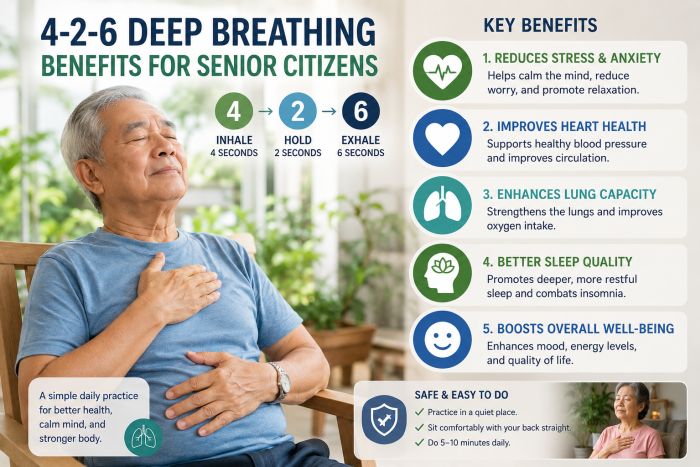
Understanding the power of **deep breathing** changes how older adults manage daily stress and personal health. The 4-2-6 technique offers a simple, controlled approach to conscious respiration. Practicing this method requires zero equipment and minimal physical effort. Seniors can perform these exercises anywhere at any time. The process utilizes a specific rhythmic counting pattern to guide your lungs. You inhale quietly through your nose for four seconds. Next, you hold that gentle breath for two full seconds. Finally, you exhale slowly through pursed lips for six seconds. This extended exhalation triggers immediate, positive changes throughout your entire nervous system.
Understanding the Mechanics of the Pattern
The human body reacts swiftly to rhythmic modifications in physical airflow. Standard breathing often stays shallow during periods of quiet resting. Shallow breathing restricts full chest expansion and reduces optimal oxygen intake. In contrast, the 4-2-6 method optimizes your lung capacity systematically. Inhaling for four seconds fills the lower lungs completely with fresh air. Holding for two seconds allows maximum oxygen exchange within your bloodstream. Exhaling for six seconds removes trapped carbon dioxide efficiently from your body. This precise ratio creates a state of balanced internal harmony.
Furthermore, the prolonged exhale phase proves most important for immediate physical relaxation. Longer exhalations slow down your natural pulse rate automatically. Your brain interprets this deliberate slowing action as a clear signal of absolute safety. Consequently, your body shifts out of the heightened fight-or-flight operational state. This transition activates your parasympathetic nervous system within just a few minutes. Older adults experience immediate physical relief as tension leaves tight muscles.
Calming the Nervous System and Reducing Anxiety
Aging brings unique lifestyle changes, medical worries, and daily operational stressors. Many senior citizens experience persistent feelings of anxiety or emotional restlessness. The 4-2-6 technique serves as an instant emotional grounding tool during stressful moments. Concentrating directly on counting numbers distracts the mind from negative, racing thoughts. The conscious mind anchors itself fully in the present physical movement. Mental clutter fades away as your attention stays focused on breathing.
Additionally, this exercise reduces the production of primary stress hormones like cortisol. Lower cortisol levels promote long-term emotional stability and better overall mental health. Seniors who practice regularly report feeling more in control of their daily emotional states. Anxiety no longer dominates their physical reactions during challenging situations. A short five-minute practice session restores mental clarity and emotional composure effectively.
Supporting Cardiovascular Health and Blood Pressure
High blood pressure affects a massive portion of the global aging population today. Sustained hypertension increases the risk of stroke, heart attack, and kidney damage. Regular practice of the 4-2-6 technique offers natural cardiovascular support. Slowing the breath expands blood vessels and improves overall circulatory flow throughout the body. Blood flows more freely, reducing resistance against delicate arterial walls.
Over time, this relaxing exercise helps lower baseline systolic and diastolic pressure readings. Heart rate variability improves as the heart muscle responds better to physical rest. Seniors using blood pressure medication often find additional support through daily practice. Naturally, you should always consult your primary physician regarding medical treatments. However, integrating simple breathing habits creates a strong foundation for heart health.
Enhancing Respiratory Strength and Lung Capacity
Lung elasticity decreases naturally as humans advance in age over the decades. Diaphragm muscles weaken, leading to shorter, less efficient breaths during daily activities. The 4-2-6 method acts as a gentle, low-impact workout for your entire respiratory system. Inhaling deeply engages the diaphragm fully, pulling air down into the lower chest cavity. Holding the breath strengthens intercostal muscles located between your ribs.
Exhaling for six seconds forces the abdominal muscles to contract gently and clear out stale air. This continuous motion sweeps away residual gas trapped deep within the pulmonary tissues. Increased oxygenation fuels cellular repair and boosts daily physical energy levels. Older adults notice less breathlessness while walking, climbing stairs, or carrying light groceries. Stronger lungs improve overall mobility and physical independence for aging individuals.
Improving Sleep Quality and Nighttime Rest
Insomnia and fragmented sleep patterns frequently plague older adults in modern society. Falling asleep proves difficult when a racing mind keeps the body awake. Practicing 4-2-6 breathing in bed prepares the mind and body for deep rest. The rhythmic counting acts like a calming bedtime routine for your brain. Muscle tension in the neck, shoulders, and back melts away completely.
Moreover, the influx of oxygen encourages the natural production of sleep-inducing hormones. Melatonin levels rise as the parasympathetic system dominates physical functions. Seniors drift off to sleep faster without relying heavily on sedative medications. Nighttime awakenings become less frequent and less disruptive to overall sleep quality. Waking up feeling refreshed and energized improves daily mood and cognitive function significantly.
Easy Daily Implementation Steps
Incorporating this simple practice into your existing daily routine requires very little effort. Find a comfortable, upright seated position in a sturdy chair with back support. Place your feet flat on the floor to maintain proper physical posture. Relax your shoulders completely and rest your hands gently on your lap.
Close your eyes to eliminate surrounding visual distractions from your environment. Begin by exhaling completely to empty your lungs of any remaining air. Inhale smoothly through your nose while counting mentally to four. Hold that air gently in your chest for a brief count of two. Release the air slowly through your mouth for six full seconds. Repeat this continuous cycle five to ten times for optimal physical benefits. Morning and evening practice sessions deliver the most transformative health results over time. Focus on consistency to unlock the full healing potential of your breath.

Related Posts


This Post Has 0 Comments